To Error Is AI
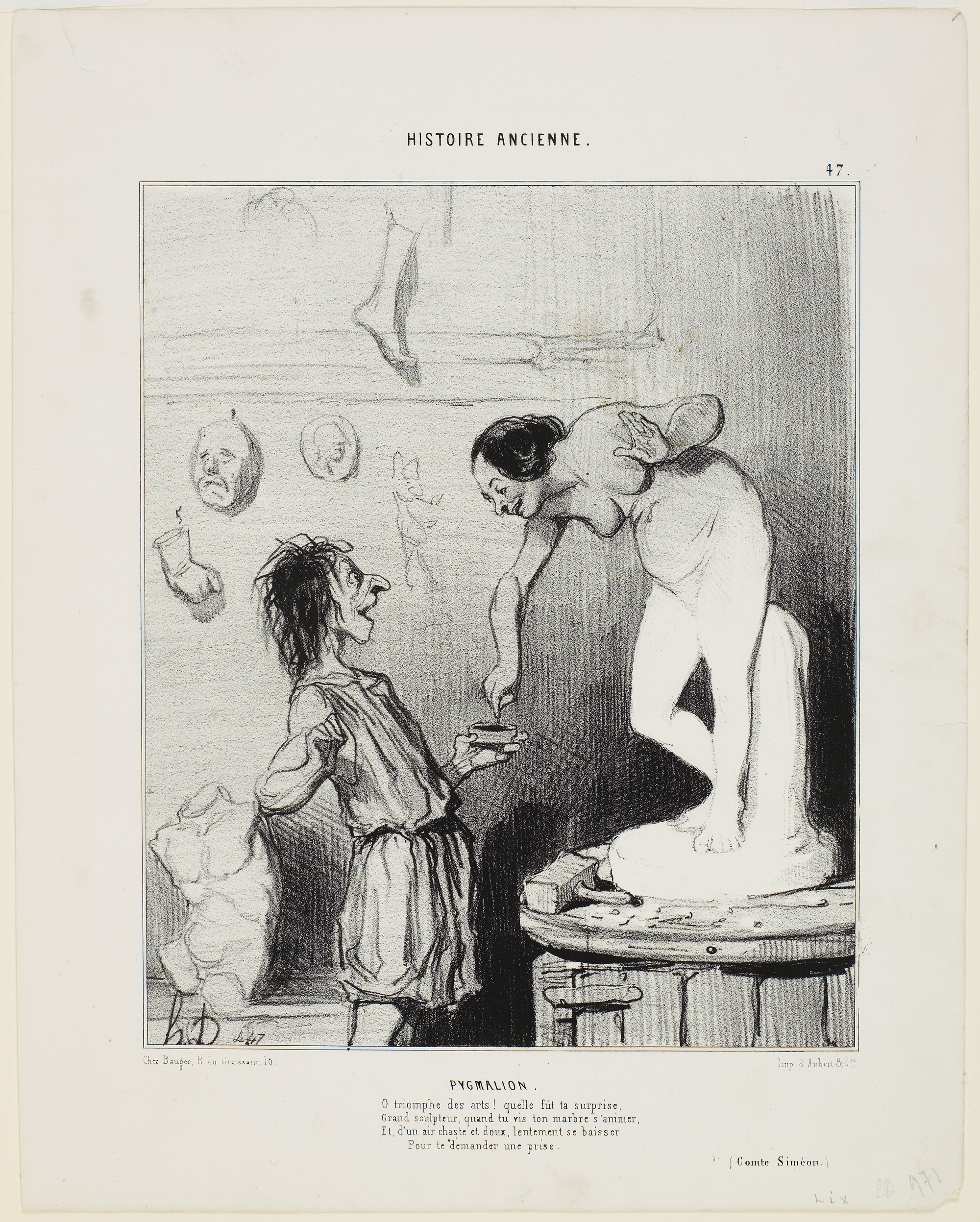
To err is human. Error is in our DNA. Without genetic 'mistakes' we'd have the adaptability of rocks, and without learning from our mistakes we'd be dumber than. Mistakes are how the universe made us and how we know the universe. Indeed, when you get something wrong is the only time you actually see things as they are, rather than living in your own simulation of things.
When we try to simulate intelligence itself, we should understand what we're doing. The 'I' in artificial intelligence is not scientifically defined at all, we're just like 'I know it when I see it', but OK, let's think about it. From practical experience, all of us know 'intelligent' people that are complete dumbasses in important regards, outright liars, or downright crooks. Some of the most 'intelligent' humans can barely get (or keep) their pants on. What we call 'intelligence' is not a permanent, universal quality that means getting it right all the time. Which is somehow what we expect from AI. But garbage in, garbage out. If to err is human, then to error is AI. It cannot be any other way, the way we have intelligence defined.
When we think of AI as an industry, what people expect is the accuracy of a computer and the conversationality of a human. But it's not clear that these two things are even compatible. If you look at the classical proof of AGI, it's the Turing Test. Creating a machine that can fool a human. So the test everyone has been oriented around is A) inherently deceptive and B) inherently bullshit. If you've ever had a conversation, you know that it's 90% bullshit. Chit-chat, flim-flam, pretending you know more than you do, hiding your weaknesses. This is the training data we used to build AI. We built a bull and are wondering why it produces bullshit.
What we learn is what we train. And AI is trained on us, and we don't have all the answers. If anything, we have more than all the answers, which is the problem; just sifting through all our bullshit for the kernals of goodness. AI can't do this for us, we did not incarnate God here. Remember that the biggest power user on Reddit (the main training source for much of this) was most likely Ghislaine Maxwell, right hand to the devil. Even if you use non-Satanic AI (like Kimi from China), you still run into the same 'problem'. If you're modeling humans you'll get errors and especially if you're at the frontiers where we, by definition, don't have the answers.
That's what we created, where we think we've created God. This was the sin that did Satan, not knowing his station. We think we can average all of human knowledge and create God but it's garbage in, garbage out. We wanted human-like AI but we understand ourselves least of all. We wished for a computer that we could talk to like a human, but humans are notorious liars and confabulists! Be careful what you wish for, cause you just might get it, as the saying goes.
We have built, thus, averaging machine producing average answers, which is only very impressive if you're below average. Quiz it about anything you know and you can see the gaps, but that's not the AI's 'fault'. That's the nature of any field of human study, and baked into the nature of reality itself, down to the quantum level. The world we live in is a statistical average of essentially random quantum movement, we just live at a big enough scale that the error rate cancels out (Planck).
As animals, we experience this surfeit of data as a simulation, sampling a very narrow spectrum of light and experiencing pain when someone bites. Our brains stitch that together into a limited and time-delayed simulation filled in with just making stuff up (gestalt). Our experience of the world is inherently lossy and hallucinatory because there is no evolutionary value to being perfect but rather to simply be good enough. Thus we see ghosts and hear things while awake and do not know when we're dreaming, this is the nature of experience. We cannot possibly know everything and so we just run a bare-assed simulation to survive as much as possible, and sometimes that simulation runs away with itself.
All we have built, in AI, is a statistical simulation on top of a sum of simulations and we expect it to produce truth? How? It's turtles all the way down and, if anything, the error rate just compounds. It's all a simulation and you're asking if the simulation you built in the simulation is real. What? All we've done is reproduce a fraction of the the mind of man, which cannot conceptualize a fraction of the mind of God. We're not talking to God. We're just babbling on.
People seem to think that we'll iron the errors out of AI but how, and most important, why? Without our errors we aren't human we're machines, doing one thing very well but not experiencing many things. But if you experience many things you inherently get contradictions between them. If we make a machine that's like a human it's going to experience 'errors' by definition. That's what being human is.
This is all the nature of human perception. It's all inference, it's turtles all the way down as the lady said. We have no direct access to reality and cannot teach it to a third party. What makes us able to proceed intelligently through the world is not, in fact, intelligence, but spirituality. A soul. Which we cannot measure and have no hard data on, so we cannot possibly imbue something else with, as we've found. The Turing Test—which was a big deal when I was studying—passed without a blip because it wasn't what we were looking for at all.
So what is a soul? I don't know, it's just another illusion to give meaning to all this (gestures at everything). But it's a useful one, especially in relation to intelligence, because it positions us in submission to a higher power, meaning acknowledging that we don't know. Which, ironically, is the one thing we know for sure. It is the only truth. There is no truth. Just a web of contradiction, just a bunch of takes, most of them mistakes. To err is human and to error is AI. I really don't think we can have it any other way.