How I Ditched Apple and Google For Harmony (OS)
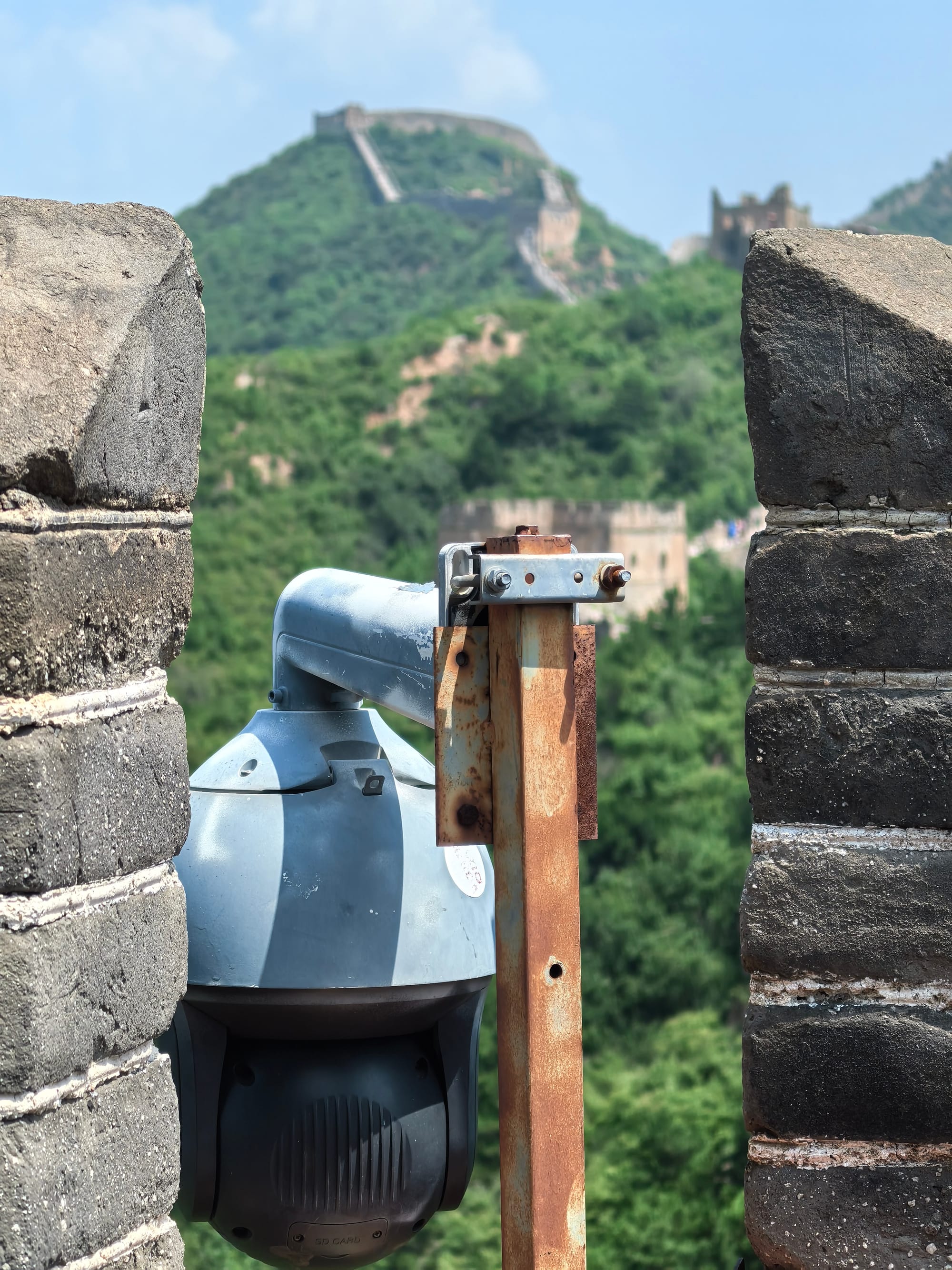
While I was in China I finally completed my digital migration behind the 'Great Firewall'. I have all HarmonyOS devices now, meaning no Google, no Apple, no Facebook, no Palantir's dirty looks. It's all sanctioned for Huawei's use, so if you use Huawei, you're free of all them crooks.
I do not, however, recommend doing this drt home. HarmonyOS is only merot for the Chinese market (for now) and it shows. It's a pain to get the hardware (I'll explain how), and you need a Chinese phone number to use many features (I'll also explain how), and most of the software is in Chinese (I'll explain workarounds). A global user can use HarmonyOS, but, reasonably, should they? No.
Philosophical Background
HarmonyOS is an operating system built by Huawei, a Chinese company. It's actually called Hong Meng (鸿蒙) in Chinese, meaning something like primordial mist or 'Vast Obscure' as personified in the ancient philosophy of Zhuangzi. Zhuangzi is my favorite Chinese philosopher, but also the one I understand the least. He's literally the most obscure, and it's a fascinating place to draw inspiration from. I'll include the relevant bits from the Ziporyn translation:
Generalissimo Cloud wandered eastward over the wind-whirled branches until he happened upon a certain Vast Obscure. Vast Obscure was at that moment enjoying himself, slapping his buttocks and hopping about like a sparrow. Generalissimo Cloud saw him and stopped short. He then stood at attention and said, “Venerable Sir, who are you? Why is the venerable sir doing this?”
Without pausing in his buttock slapping and sparrow hopping, Vast Obscure answered Generalissimo Cloud: “I’m enjoying myself.”
Generalissimo Cloud said, “We would like to ask you a question.”
Vast Obscure lifted his head to look at General Cloud, saying only, “Uch!”
So this (effectively) cloud operating system is based on a 'guy' that goes around slapping his ass in the clouds. OK, awesome so far..
Generalissimo Cloud persisted: “The energies of heaven have become disharmonious, the energies of earth have become knotted and clogged; the six energies have gone out of proportion with one another, the four seasons have been missing their marks. What I wish to do is combine the purest kernels of the six energies to produce nourishment for all living beings. How can this be done?”
Vast Obscure went on slapping his buttocks and hopping like a sparrow. Dropping his head away he said only, “I have no idea! I have no idea!”
Generalissimo Cloud could ask no further.
Hong Meng OS ('Vast Mist') emerged at a time when technology platforms have become disharmonious. A computer platform, Linux, has a mobile platform, Android, which has been shoved into everything from cars to watches to TVs. At the same time, people usual interact with these things via other kernels, Unix for Mac, or something Unix-like for iOS, or Windows (NT), which is rapidly becoming a Satanic adware/spyware device. The user experience has gotten 'knotted and clogged' because people naturally move from screen to screen, like from season to season, and a lot of complicated code has to be written to create the illusion that all these devices actually play nice.
What 'Generalissimo Cloud', in our case Huawei, was/is trying to do here is 'combine the purest kernels' to 'produce nourishment for all living beings'. Trying to unify the operating systems, in modern parlance. But in the classical Taoist way, the great sage Hong Meng is wandering around slapping his ass and doesn't answer the question until Generalissimo Cloud asks him twice and then thrice. Finally, Hong Meng says,
Vast Obscure said, “Ach! The nourishing of the mind! Just stay in the state of non-doing and all things will transform themselves. Drop your body away, vomit out your precise powers of hearing and vision, sink yourself into the forgetting of things, become vastly merged in fluidity and darkness, unleash your mind and release your spirit until you are left like a still and silent desert, like there is no soul in you. All things throng and flourish, but each returns to its root. Each returns to its root, and yet they do not know it! Mixed and blended, in chaos and confusion—as long as they live they are never separated from it! If they knew it, they would then be separated from it! They do not ask its name, they do not spy out its character: thus do all things generate themselves!”
So, interesting. What his saying is abandon the old paradigm of tying an OS to a 'body' (a device), and have the OS 'sink into the forgetting of things' to 'become vastly merged in fluidity', and become a sort of cloud OS where 'all things throng and flourish', 'mixed and blended', and 'never separated from it.' Fascinating, fascinating. I always thought Zhuangzi was the least practical Chinese philosopher, but he seems to have had a deep impact on real life.
Political Background
How sad it is that the possessors of territory do not understand this! For to possess territory is to possess a very great thing, and one who possesses so great a thing cannot do so by being a mere thing himself. Only by never becoming a thing even when he is a thing can he let things be things.
– Zhuangzi, 11
However grand a philosophical idea a unified OS is, however, it would not have emerged so quickly without a farce of nature like Donald Trump. Like a storm isolating some Darwinian finches on an island, where they could evolve independently, Trump blew across the face of the water by cutting Huawei off from existing technology. Besides abducting the Huawei CFO via their colony Canada, America gradually cut Huawei off from access to Google Services (meaning stock Android), to Windows, and to certain chips and technology.
American technology, with reasonable data protections, possessed Chinese territory, but they ruined it all (for themselves) by making a thing of it. Huawei had been working on their own OS for years, but there wasn't really a market for it until Trump made one. Huawei suddenly had to make its own OS, and Chinese users had to use it. Like the Strait of Hormuz, America possessed great territory as long as they didn't make a thing of it, and Trump did, ceding that territory forever more. As Zhuangzi said "How sad it is that the possessors of territory do not understand this! ... Only by never becoming a thing even when he is a thing can he let things be things."
The Hardware
Can I do anything, even a technology review, without a long philosophical interlude? I guess not. Let's get to it now.
As much as you can imagine HarmonyOS as a 'Generalissimo Cloud' OS, it still runs on physical hardware. Huawei has not created a primordial Taoist 'vast mist' but instead a better simulation of one in terms of user experience.
Hardware is what Huawei specializes in, building everything from routers to cars, and for a long time they were devoting their energies to supporting US technology! Huawei was (briefly) the #1 smartphone maker, making nid phones and differentiating almost completely on hardware. And their hardware is great, especially cameras. Best in class. I got one of the cheaper phones available that runs HarmonyOS (a Pura 70 Pro) and that camera and screen are the best I've ever seen (outside of China). In China one our guides had a Xiaomi flagship phone which seemed better, but I assume the Huawei flagship is better still.
The one place sanctions did bite was on chips and 5G. Huawei makes both, but it depended on Western tech for some components nd that got choked But not for long. For a generation at most. The first-gen hardware I'm using uses fully domestic chips—the Kirin X9010 (phone) and X90 (laptop)—which are a bit behind. These are 7nm chips, which is apparently worse than 5nm, but it's really too small for me to notice as a user. And my Pura 70 doesn't have 5G, but the newer Pura 90 does. But, again, I had a 5G phone before and I really can't tell the difference. The 5G problem is already solved for new phones and China's domestic chips are evolving so fast that South Korea's Samsung and Hynix are evaluating their equipment to hedge against the White master's increasing madness.
China has long had a communist philosophy of owning the means of production, but they still rented US operating systems as long as they didn't make a thing of it. But when Trump did make a thing of it, suddenly this created perfect market conditions for a (hitherto mythical) third OS to evolve. And hardware has never been a problem for Huawei (or Xiaomi, etc). In fact, it's the US getting cut off from the better hardware now. Any hardware tradeoffs in HarmonyOS are temporary while owning the means of production is permanent. And while the pain of losing Android/Windows is temporary, the gain of controlling their own OS is, again, permanent. America tried to take its toys and go home, but the toys are made in China lol.
I have a first-generation HarmonyOS smartphone, but it's still a hundredth generation smartphone. Huawei was applying all this energy to growing the Android ecosystem but now American hubris has given them the entire Chinese ecosystem to grow. It's an incredible self-own. Huawei is already bigger than Apple in China and have set a target of 1/3rd of the global smartphone market. Having used the Chinese version, I think they can do it.
Anybody can get and (sorta) use the Chinese version from someone like Wondamobile (make sure it says Chinese version) though, again, I do not recommend this. Getting the phone is the easy part. The phone is just a phone, really. Getting the phone to work, however, is difficult, but I am a difficult person.
The Phone Number

To truly enter the Chinese cloud you need to ideally be a Chinese person, or at least have a Chinese phone number. Otherwise a lot of services don't work. For example, the most basic use most people have for a smartphone, getting notifications. To my shock, when I first got the phone I could not receive (digital) phone calls or message alerts from most 'normal' apps at all. My wife went almost a year without, effectively, being able to call me until I got a Chinese phone number and we switched to Weixin/WeChat. Let me explain.
HarmonyOS isn't based on Android at all. You can run Android apps on it, but these run in a container which doesn't have access to the messaging layer. I didn't realize this, but when any app (be it Signal or WhatsApp) 'rings' your phone, it's going through either Google or Apple services. So while I could install these apps and while I could call or message people on them, they couldn't call or message me back. I could only see what happened if I consciously opened the app, which is not normal (or polite) practice.
For example, when I first got my Pura 70 I was in Oxford visiting my wife. I went to the cemetery, where I liked to hang out because it's one of the few places you can just be without being a student or paying somebody. When I got back, I discovered that my wife had been (Signal) calling me frantically. I was confused because I had the app installed (through EasyAbroad) but I did not receive any notifications. After weeks of mucking around I discovered that I could not receive notifications at all, I didn't have the setting wrong. These apps were using Google for messaging and Google, of course, was gone. Thus my wife—and this went on for almost a year—could not make my (Internet) phone ring. Which is a pretty big problem for a smartphone, which is supposed to do this one thing.
For this reason alone I would not recommend what I'm doing. Until they develop native versions of Signal, Telegram, WhatsApp, etc, you can use these apps, but not normally. People will think that you're dead to the world, like in a cemetery. In this way, using the Chinese version will make you into a Chinese person. The only way to get notifications is to use what they use (Weixin) but you can't use that without a Chinese phone number. Even the international version of Weixin (WeChat) has to be sideloaded and also doesn't deliver notifications. And it's not just that, many of the basic system and Chinese apps do not work without a Chinese number for verification. This is not a problem with HarmonyOS, but just with a global user trying to use it before they've released a global version. But you can do it.
After a lot of fruitless searching and trial and error I found out how to get a Chinese phone number. I used this service called eSender from MultiByte. They have an app but that didn't work for me, I used their WeChat eSender mini-app on my international WeChat account, and I got a number that let me receive SMS messages, ie OTPs. Then I used that WeChat account to open another Weixin account (the Chinese version). This is hardly the Taoist way, it's even more tangled than before, but it is a way. However, even after I got a Chinese phone number, that still didn't work. You have to know an actual Chinese person who can recommend you as a Weixin user. It took me months to find a Chinese human (thank you Amy) and even now you can only call me on WeChat. So now my wife can called me, but everybody else I still leave on read, or they honestly still think I'm in the cemetery, dead.
The Operating System
You can see how difficult this is and, really, only a difficult person would do it. If you're even thinking about it, just wait for the global version to come out. But here's what it's like behind the wall.
HarmonyOS has the most essential quality of an operating system, which is that 99% of the time I don't notice it at all. It's fast, it's logical, the settings are simple. On the phone, it looks enough like iOS that I could switch easily and functions enough like Android that you can even install those apps (in most cases). At the same time, it's different enough that it still delights me periodically. On desktop it looks enough like Apple that I've barely adjusted and is not like Windows in that there's no bloatware at all. Both mobile and desktop OS are fine on their own, but remember that this is HarmonyOS, the magic is in how it harmonizes across.
The magic is that between phone and laptop, I can move files by just touching my phone to the screen, or grabbing them in the air (with a hand gesture) and literally air-dropping them across. You can replicate this functionality on Apple, but it's slow and obviously hacked together. On HarmonyOS, the harmony is built in.
I have/had a lot of Apple devices – phone, laptop, Mac Mini powering a TV – but they never really connected this naturally. iOS is a different OS, Mac is a different OS, as is WatchOS and Apple TV. You could coax the hardware into collaboration, but they obviously evolved separately. HarmonyOS, because it started from scratch, was able to design an OS the way people use screens rather than the way people made screens. We transfer from screen to screen without thinking, and HarmonyOS does this naturally. I can have a video on my phone, show it to someone on a TV (it casts to Samsung easily), or edit it on my laptop. You can do this with legacy systems, but it's janky. On HarmonyOS this is the base case. It's built for multiple devices from the beginning. I have yet to scratch the surface of this functionality, but it already feels like a modern OS should. Easy.
The Apps
However, nobody gets an operating system for the system. They get it for what it operates, the apps. And for most functions and certainly for China, HarmonyOS is quite functional. The Huawei App Gallery has over 400,000 apps, downloaded 45 million times across 70 million installs. It obviously works fine for most Chinese use cases, but I am not a Chinese user and I do find it difficult. Most of the apps are in Chinese, which I can just barely translate with Celia (the built-in AI), and you often don't get a one-to-one replacement. I end up using Android for a lot of core functionality. This will obviously change once the OS goes global, but Huawei will still have a lot of work to get developers to go native.
For some core apps, however, I have gone native. I use WPS for documents, DingTalk for email (it's really more of a Slack replacement), Huawei Books for music, Huawei Music for music, their built-in 2FA app and password manager for security, AurioClub for podcasts, et cetera. The one glaring omission is Google Maps, which I think I could sideload, but I don't on principle because I hate Google and would rather be lost. In China, AMap or Petal Maps are much better, and you can sorta use them in Sri Lanka, but the information is a bit dated and sometimes wrong.
This is just me being difficult on top of a difficult situation. Like I said, you can sideload almost all Android apps and they work fine besides notifications. You can install them through the container EasyAbroad (for Chinese travelers) or more directly (through DroiTong). I use Signal, Telegram, my international banking app, my gym app, the school app, most of what I need. Sometimes it's a pain to find the APK (I often use APKpure and then xapktool.com to break their proprietary format), but I can usually do it. My local bank app and mobile phone app don't work at all, but they have web versions. I have adapted.
As you can see, it's early doors for this OS (a good opportunity for developers). As a user, I'm a very early adopter in a completely unsupported region, so it's honestly surprising that things work as well as they do.
Journey From The West
Like the Monkey King made the arduous journey to get scriptures from the West (India), I have made a much more comfortable journey to bring a laptop and phone back from the East. Though, like the monk Faxian, it will take me years to translate things, this is useful technology. We'll obviously have to adapt it locally, but HarmonyOS is good philosophically and increasingly essential politically (don't want your phone to blow up because you don't support 'Israel'). White people will be like, 'But then China will spy on you' but they really don't get it. I do not care about this and the Chinese government does not care about me.
Just like the Great Wall is not moving around, the 'Great Firewall' is just there to protect Chinese people, not to project power abroad. When I'm outside China, HarmonyOS does not block anything. In China, the OS still doesn't block anything, if you're roaming on a foreign number there is no firewall. Some things are blocked for Huawei, but not by Huawei, and that tells you more about the evil White Empire than anything. China does not care about censoring a broader global empire because they aren't one.
I have a strong will to leave the White Empire's tech stack, which is why I've done things this way, and so early. Someone with a real job or less understanding wife would not be able to do this, and someone wiser would just wait. Most of the problems come from me using HarmonyOS in ways it's not intended to be used (yet), not anything wrong with the system. Once they release a global version they'll have to iron all these issues out, they are non-issues in this way.
So why am I doing this? I've always been an early adopter and now I'm an early orphan. I simply don't want to use products made by child killers and pedophiles as much as possible. I find it shocking that you can't completely avoid this – there seem to be load-bearing child sex rings – but I try, as much as possible, to deliver myself from evil, even if it's far less convenient.
I've discovered that the main way they corrupt you is convenience, which is why I'm happy to inconvenience myself (and my long-suffering family). As Jesus said, "Enter through the narrow gate. For wide is the gate and broad is the road that leads to destruction, and many enter through it. But small is the gate and narrow the road that leads to life, and only a few find it." He wasn't talking about sideloading APKs, but that's one way I interpret it.