Logistics War 2: The Reserve Fleet
We have been studying how the US, more properly called the White Empire, has been running out of reserves in the connected battles more properly called World War III. Yesterday we looked at a well known reserve, the Strategic Petroleum Reserve, and how it's running empty. Now let's look at another load-bearing reserve, The National Defense Reserve Fleet.
The NDRF is (really was) a fleet of merchant ships that's supposed to let the Empire start shit and get away with it, without damage to its military or economy. These are not warships but the Empire can't wage war without them. As the saying goes, amateurs talk strategy, professionals talk logistics.
As a 1976 government (GAO) report says, "The National Defense Reserve Fleet provides supplemental merchant shipping capacity that the United States relies upon during a military or commercial shipping crisis." The White Empire is, of course, is the crisis to the rest of the world, but this buffer fleet allows them to avoid consequences. It allowed them to surge materiels to attack people and supplement commercial shipping to keep their own sheep from noticing.
At the 'end' of World War II, the US owned "4,900 war-built ships of over 1,000 gross tons." The US sold off much of this fleet, but retained access to many of them as what was called a National Defense Reserve Fleet. World War II, of course, never ended for the colored/communist world, for us it was just World War Too. To that end, the Reserve Fleet was immediately put to use subduing independence movements across the globe. As a 1976 report said, "The importance of these ships can be seen from the fact that 40 percent of the materiel moving to Vietnam in 1967 was transported by NDRF ships."
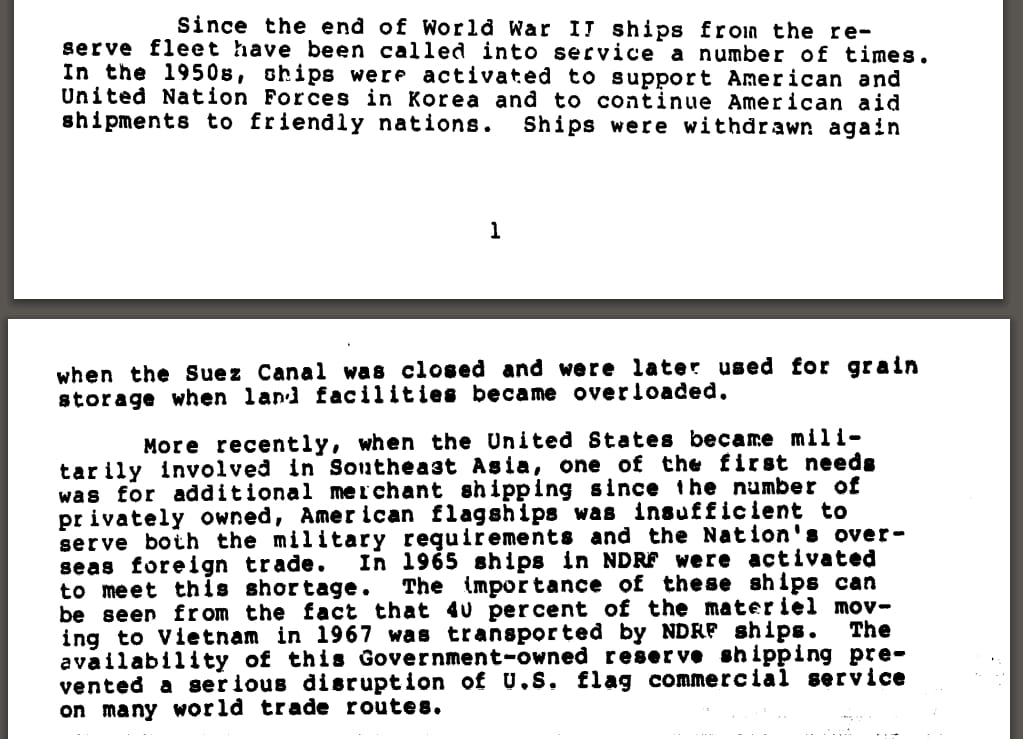
The Reserve Fleet was used for "both military requirements and the Nation's overseas foreign trade." That is to say, they were used to both offend militarily and defend the empire from economic consequences of the same. The Reserve Fleet moved men and materiel there, and kept the loot coming back here. This has always been the play, the White Empire has always been naval, but in typical American fashion they privatized it and rented it back to themselves.
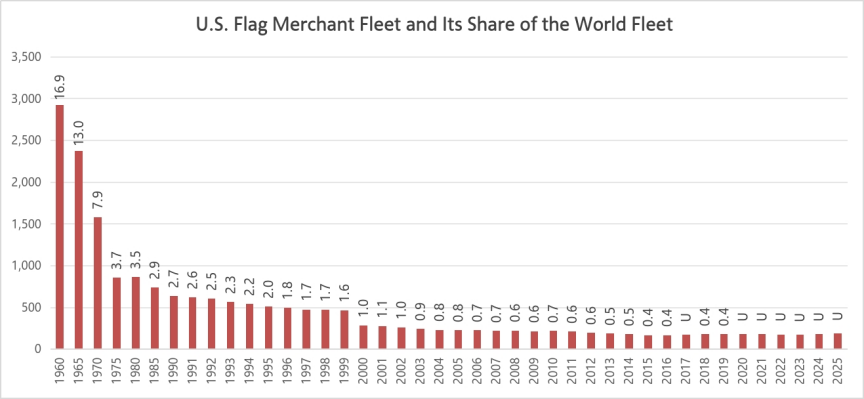
During war time (which is all the time) the Empire didn't just depend on their Reserve Fleet. They relied on US commercial shipping in general because colonialism is, after all, a business proposition. However, America's stewardship of the White Empire has been receding so rapidly that, at this point, US shipping is a rounding error. This is the total US Flag Merchant Fleet, which drops from 17% of the world's shipping in 1960 to a rounding 0.4% last measured.
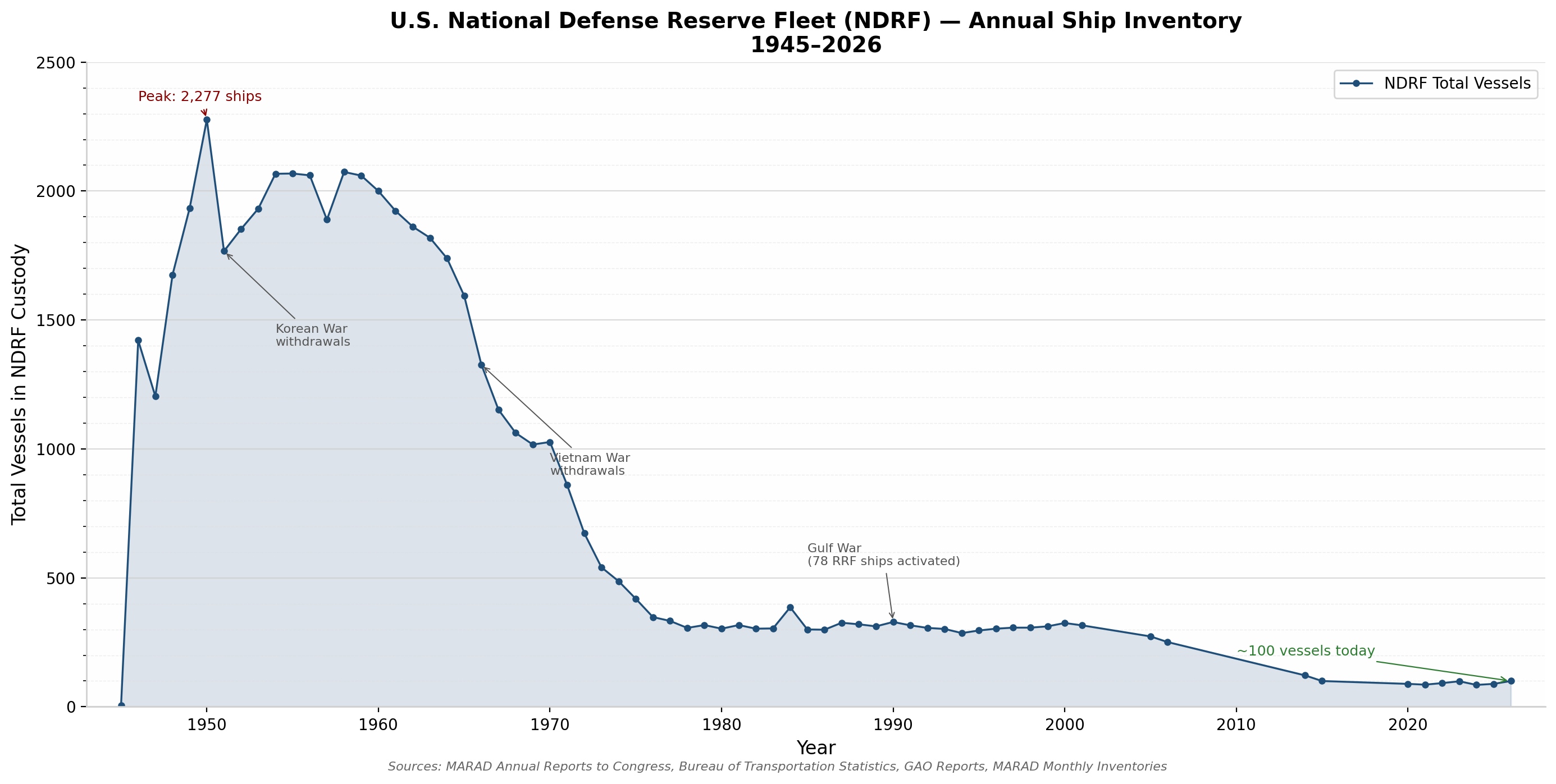
And here you can see the subset of this is the National Defense Reserve Fleet, private ships that can be commandeered by the military (and/or run privately under government direction). This also dropped precipitiously.
By the 1970s, most of these ships were barely shipshape. The GAO said, "In 1975 there were no privately owned break-bulk ships less than 5 years old operating under U.S. flag." The ships were, on average, 30 years old and barely habitable. As the GAO said,"The Victory ships in NDRF fall far short of habitability facilities provided by modern merchant vessels." The seaman also had limited motility. In the Vietnam invasion, "shortage of licensed marine engineers and deck officers [was] the principal cause of delayed and short-handed sailings."
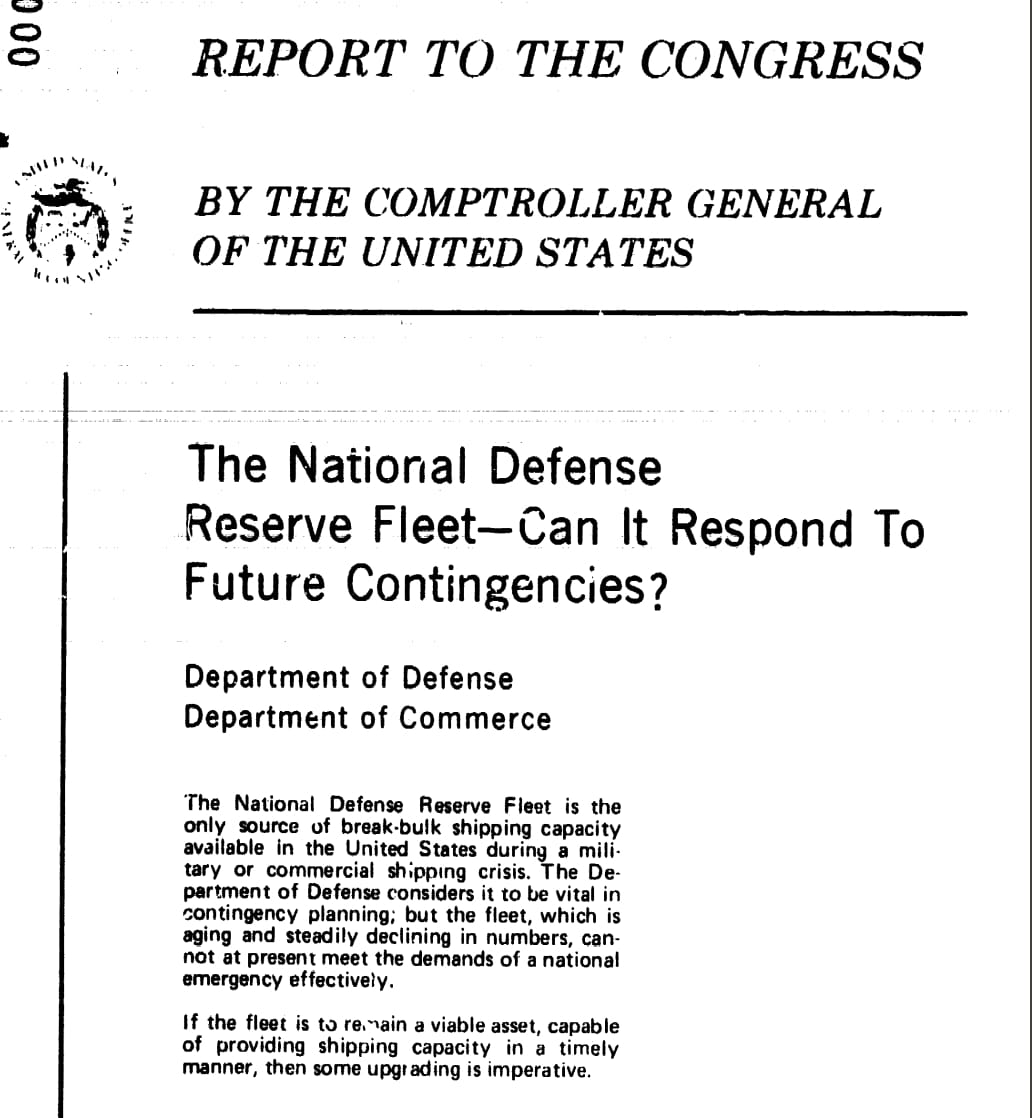
These ships were shippy back in the 1970s, but back then the US government still gave a ship. That 1976 report recommend "additional financing" and also "to acquire newer ships to maintain the useful life of this national asset beyond the 1980s." By 1991, however, the recommendations were very different.
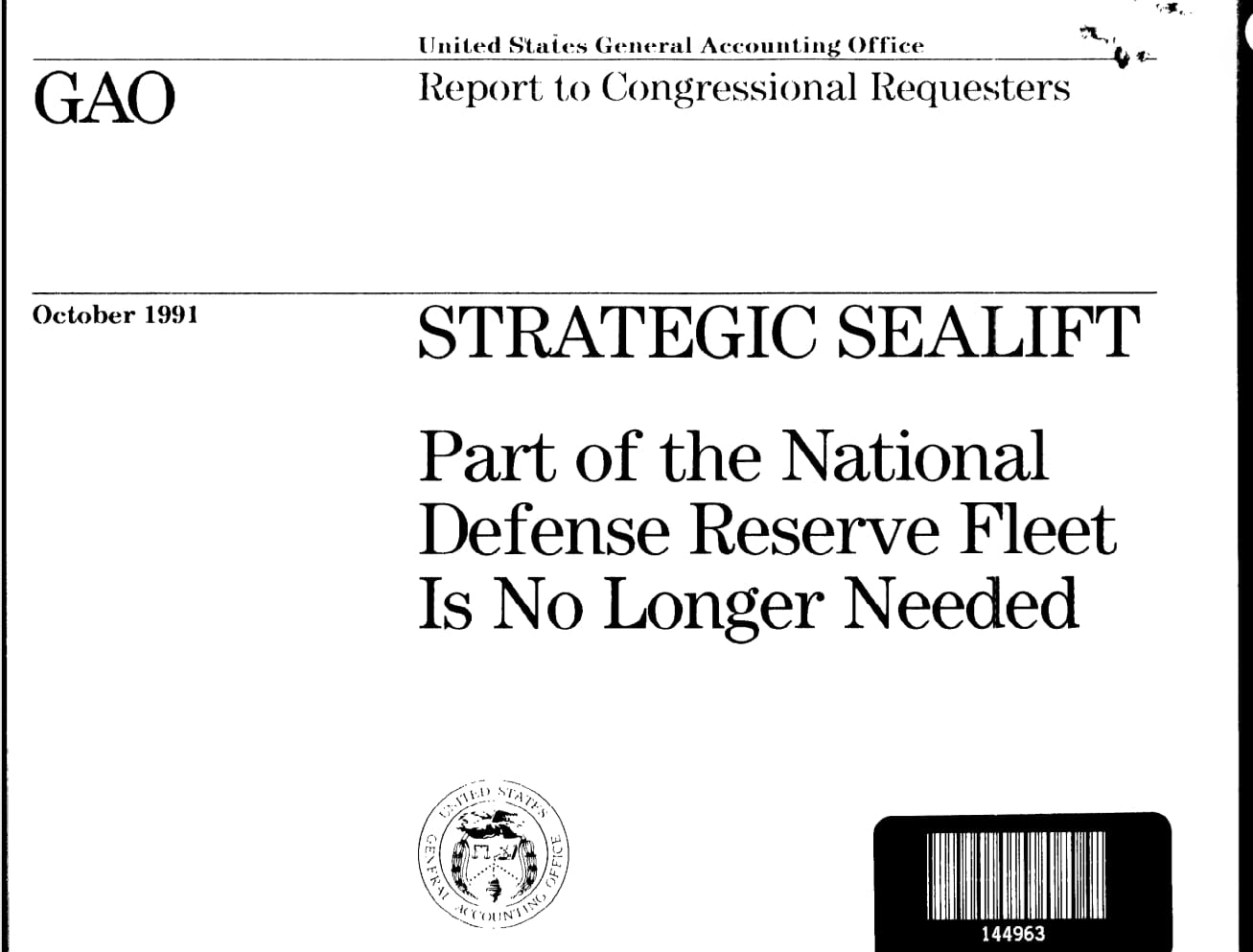
By 1991, the GAO report was basically saying, 'who gives a ship?' They said, "Recent media reports have described part of the National Defense Reserve Fleet as the “ghost fleet” and its ships as “rust buckets.”" Rather than replenish, they recommended scrapping much of it.
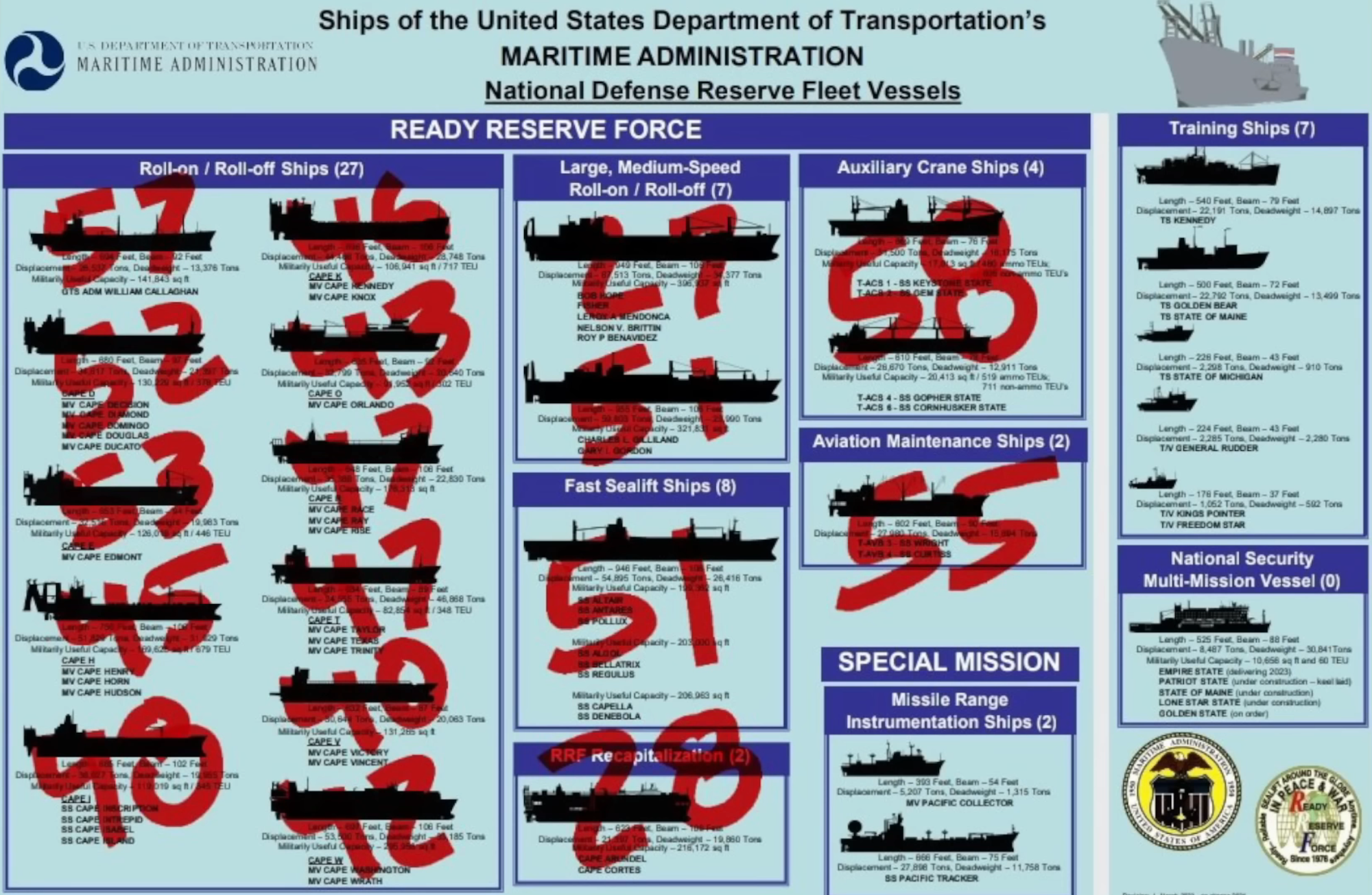
At this point the fleet had already divided into the Ready Reserve Force (96 ships that could actually be called upon) and the Rusty Reserve Force, 116 ships that were basically falling apart. This report recommended basically ditching the latter, which is what happened. The whole Reserve Fleet is about 100 now, what the RRF was in 1991.
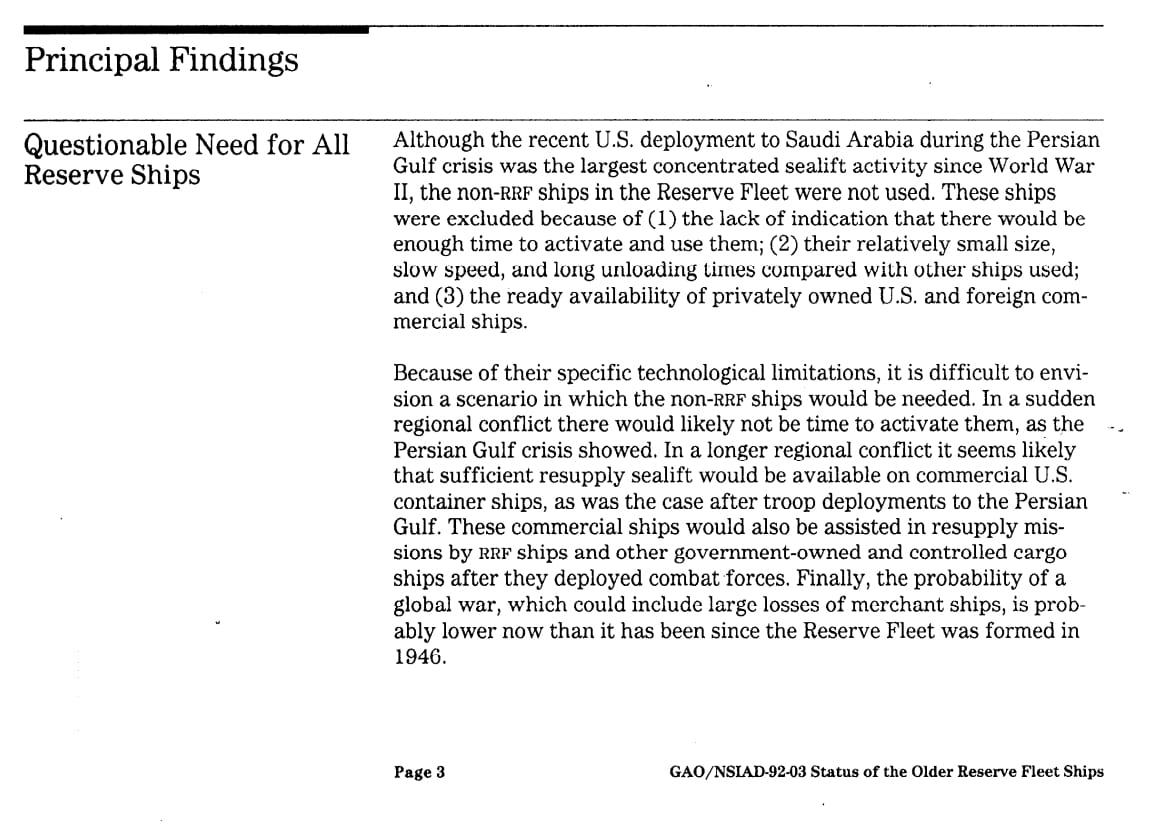
The 1990s reasoning (after the end of history) was that, "It is difficult to envision a scenario in which the non-RRF ships would be needed... the probability of a global war, which could include large losses of merchant ships, is probably lower now than it has been since the Reserve Fleet was formed in 1946." Famous last words.
If you look at the Ready Reserve Fleet now, they're like the NDRF was 30 years ago. The ships are 45 years old, on average, only 40% were actually ready in the last test, and the crews are old and unready too.
What happened here? Well, after the two Iraq Wars, America literally got high on their own supply. They had bases in Kuwait and then Qatar and they thought they could freebase forever. Why bother with shipping from America when you had a whole conquered empire? They even came up with a new acronym. PWRM. Pre-positioned War Reserve Materiel.
As a 2024 insider trading newsletter said, "Pre-positioned war reserve materiel (PWRM) reduces demand for strategic airlift and sealift assets by locating heavy and bulky materiel closer to the theater of operations." The experience they learned from the Iraq Wars were that, "During Operation Desert Shield in 1990-1991, PWRM enabled the delivery of Marine Corps armored units to the Persian Gulf one month before the arrival of other armored units shipped from the United States." And so they expanded these occupation bases all over.
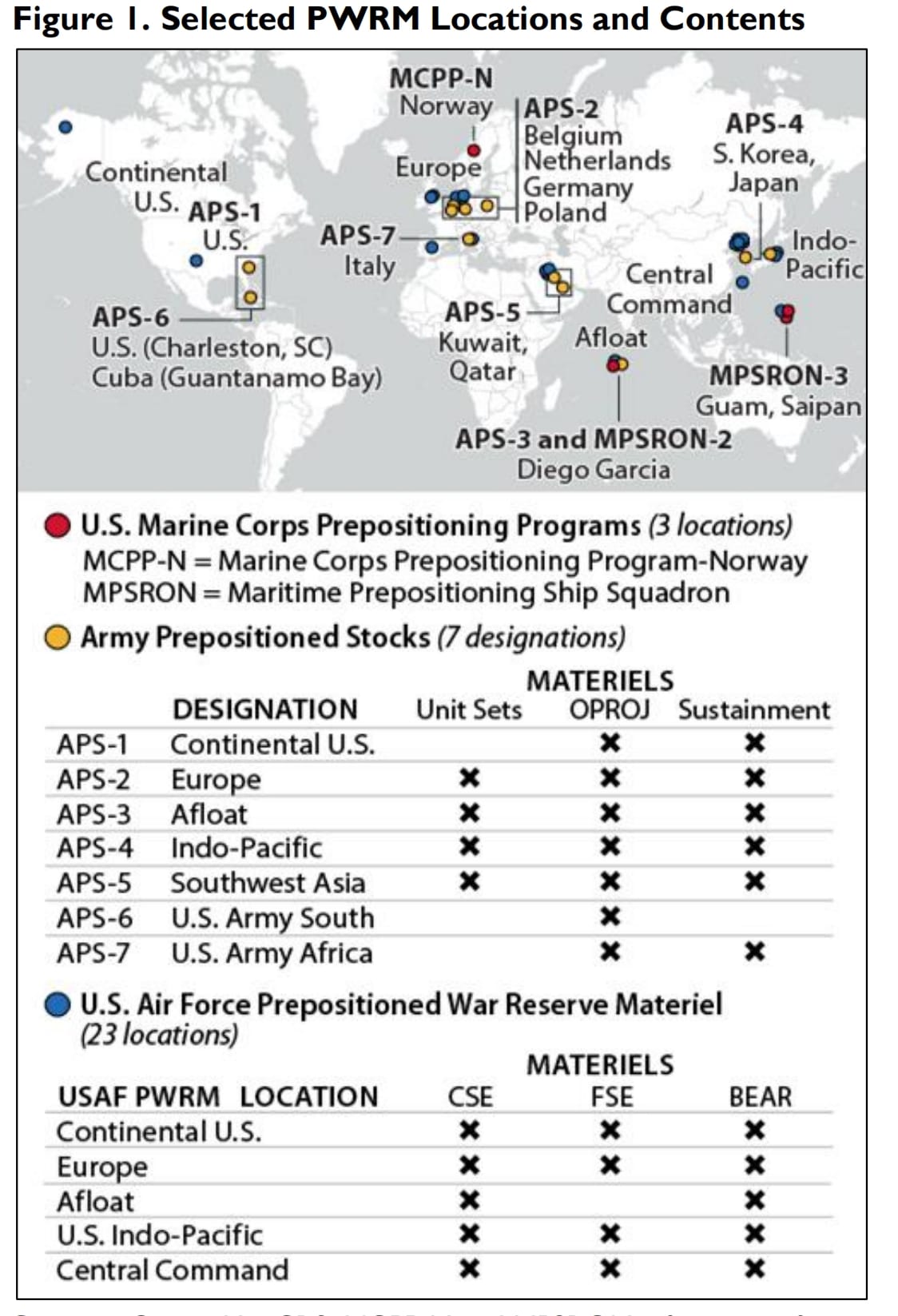
Rather than requisitioning ships doing other shit (which could take weeks) and sending materiel all the way from the center of White Empire, they used that empire to store war materiel closer to the war front. But this has the obvious problem of said materiel getting blown up. In 2024 they kinda acknowledged this problem, saying, "The effectiveness of large PWRM stocks, however, alsomakes them potential priority targets for adversary long range weapons in conflict scenarios." No duh.
Their solution to this was wishful thinking. They said, "DOD’s Joint Concept for Logistics envisions a “comprehensive array” of large and small PWRM stocks that can be selectively accessed and quickly shifted between theaters of operations, even in contested environments." The plan was, in case of war, to move the materiel between bases. But how? You'd need to ship it, and with what ships? You just abandoned them! As honest war criminal Sal Mercogliano said, "You're going to need big boats, I cannot lie."
In 2026 this plan got punched in the face. The PWRM for the Iran War got blown up by Iran's long range weapons almost immediately, caches in Bahrain and Oman chief among them. This meant that warships like the USS Lincoln couldn't resupply properly and began running out of supplies. Pirates started walking the plank on their own, morale was so low.
The Empire tried to resupply from Diego Garcia, but that is just the tip of an extinct volcano, and that too had to get resupplied from somewhere. Look at the map, where? And again, how? There are very few US flagged ships in general, and even fewer in the reserve fleet that were available. People like Mercogliano have been warning for a long time that the merchant marine was the backbone of the war machine and that it was geriatric and creaking, but no one gave a ship. Now they're in deep ship and there's nothing they can do about it. Iran had a strategy to take down American logistics, which sinks their Navy without sinking a ship.
Sources: